
The Fitness Score is a long-term indicator of your body’s overall fitness. It helps you understand how your lifestyle especially movement, recovery, and mental load affects your physical condition over an extended period.
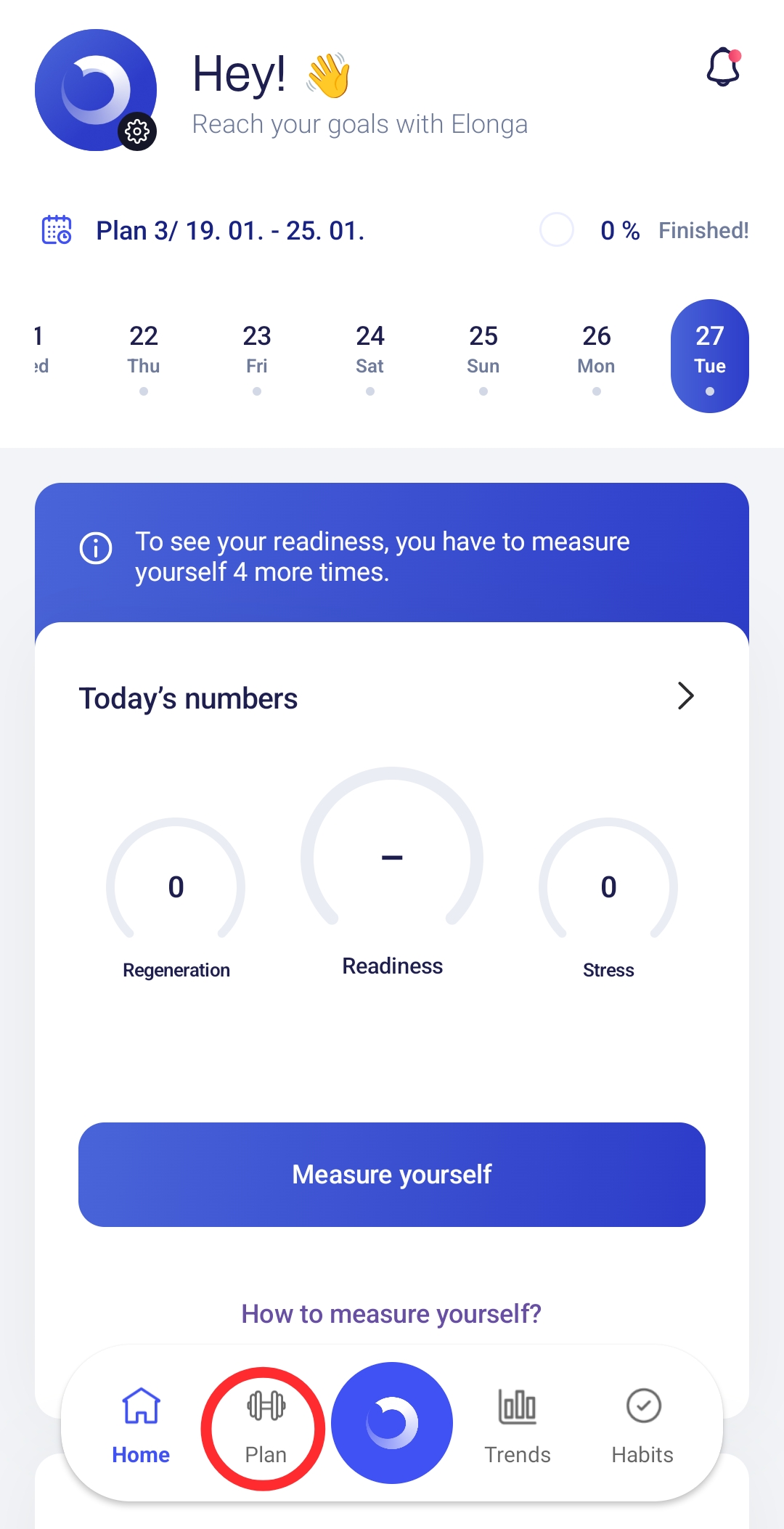
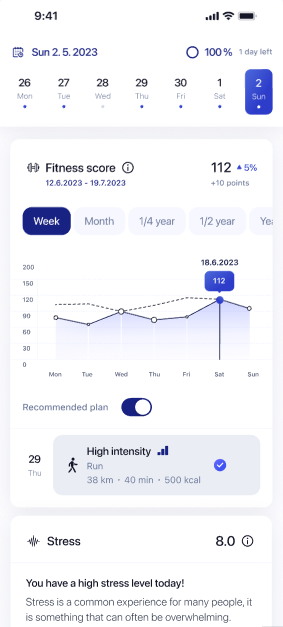
What the Fitness Score Shows
reflects the long-term effect of physical activities on overall fitness,
is based not only on completed activities but also on the overall physiological state measured through morning HRV,
evaluates how different aspects of your routine contribute to improving or worsening your fitness.
How to Interpret It
Fitness Score does not have a fixed upper limit or a traditional scale. Its value can continue to increase over time as long as you train consistently and progressively. The goal is not to reach the highest possible number, but to maintain sustainable progress over the long term.
The key reference point is the dashed line in the graph. This line represents your currently recommended level of training load. The aim is to stay as close to this value as possible, avoiding overtraining beyond what your body is ready to handle.
Fitness Score is therefore not about chasing the highest number, but about guiding you toward balanced and effective long-term training.
The score is entirely individual and it does not compare you to others, only to your own long-term trend.
It takes into account:
gradual changes in stress and recovery,
consistency in following the movement plan,
how your body responds to training or prolonged load.
What Can Cause a Decrease in the Score
A temporary decrease may occur even when activity levels are high, for example when:
the body is under prolonged stress,
recovery does not keep pace with the current load,
mental or physical fatigue is present,
sleep or other lifestyle factors (nutrition, illness, etc.) disrupt balance.
Summary
The Fitness Score is a sensitive indicator that highlights the balance or imbalance between what your body can handle and what demands you place on it.
It helps you identify hidden overload, track long-term adaptation, and maintain a stable, healthy fitness trajectory.
Was this article helpful?
That’s Great!
Thank you for your feedback
Sorry! We couldn't be helpful
Thank you for your feedback
Feedback sent
We appreciate your effort and will try to fix the article