
HRV (Heart Rate Variability) refers to the natural variations in the time interval between individual heartbeats. It is not the heart rate itself, but the differences in timing between each beat. A healthy heart does not beat like a metronome small fluctuations are a sign of a flexible and responsive autonomic nervous system (ANS).
Why HRV Matters
HRV reflects the balance between the two branches of the autonomic nervous system:
Sympathetic system – activation, stress, performance
Parasympathetic system – recovery, calm, restoration
General rule:
Higher HRV = the body switches well between stress and rest
Long-term low HRV = may indicate fatigue, stress, illness, or insufficient recovery
How Elonga Uses HRV
Elonga uses the SA-HRV (Spectral Analysis of HRV) method, which evaluates spectral components of variability and accurately measures both sympathetic and parasympathetic activity.
From this measurement, Elonga derives key metrics:
Readiness – how prepared the body is for stress or physical load
Stress – level of sympathetic activation
Recovery – degree of physiological restoration
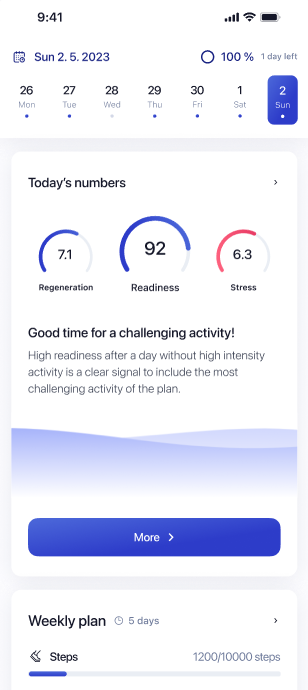
HRV shows how your body responds to sleep, training, psychological load, and overall lifestyle.
What Influences HRV
HRV can be significantly affected by:
sleep quality and duration
training and physical load
alcohol, caffeine, medications
psychological stress
illness or skipped meals
late-evening activity
We recommend measuring every morning, at the same time, fasted, and in calm conditions.
Summary
HRV is one of the most sensitive indicators of the state of the autonomic nervous system and the body’s overall balance. It helps detect early signs of fatigue, overload, and the quality of recovery.
Regular HRV tracking in Elonga helps you plan training, daily routine, and rest more effectively.
Was this article helpful?
That’s Great!
Thank you for your feedback
Sorry! We couldn't be helpful
Thank you for your feedback
Feedback sent
We appreciate your effort and will try to fix the article